Home
Balcony Flooring Ideas for Small Spaces: Deck Tiles, Rugs & More
A better floor for your little patch of outdoors.
Home Finds Daily · October 8, 2026
This article may contain affiliate links. If you buy through these links, we may earn a commission at no additional cost to you. As an Amazon Associate, we earn from qualifying purchases.
Give that bare balcony a reason to be used
A balcony can have a lovely view and still feel like the last place you want to sit. Often, the gray floor is doing most of the damage to the mood. A little texture or color underfoot can make your morning coffee spot feel more like an outdoor room.
The best balcony flooring ideas start with how you use the space. Wood tiles bring warmth, capped composite offers a wood look without regular refinishing, and an outdoor rug can define one comfortable corner. Here’s how to choose among them, work out what will fit, and avoid buying a floor that gets in the way.
Start with your balcony, then choose the covering
Before shopping, check the existing floor, the door, and where rainwater goes. Look for a sound, firm surface and keep drains and drainage outlets accessible. A covering can improve the appearance of ordinary concrete; it cannot repair leaks, damaged waterproofing, or an unstable balcony.
Measure the narrowest usable width and the full length, then mark posts, corners, and the door’s movement on a quick sketch. Added thickness matters: the finished floor must allow the door to open and close freely, including any rug layered on top.
For apartment balcony flooring, check your lease and building rules before buying. Removable tiles may suit the space, but removal alone does not guarantee permission or prevent marks underneath. Ask about permitted materials, fire restrictions, added weight, and compatibility with any existing membrane. If you’re unsure what the surface is, get the building’s guidance first.
Which balcony flooring option fits your plans?
Think about the whole project rather than just one pack. Coverage, cuts, compatible edging, and future upkeep all affect what is practical. If you only use a small seating corner, you may not need to cover every inch.
| Option | Choose it for | Plan around |
|---|---|---|
| Wood deck tiles | Natural grain and a warmer-looking floor | Periodic finish care; exposure and drainage |
| Capped composite tiles | A wood look with less refinishing | Cleaning, clearance, matching connectors and trims |
| Outdoor rug | Color and a defined seating area | Wet weather, drying underneath and secure, flat edges |
| Reversible plastic mat | A changeable pattern and rolled storage | Movement in wind, flat edges and furniture abrasion |
| Outdoor plastic tiles | A modular alternative to wood | The exact product’s sun, temperature and surface requirements |
1. Wood deck tiles: texture that makes a small space feel inviting
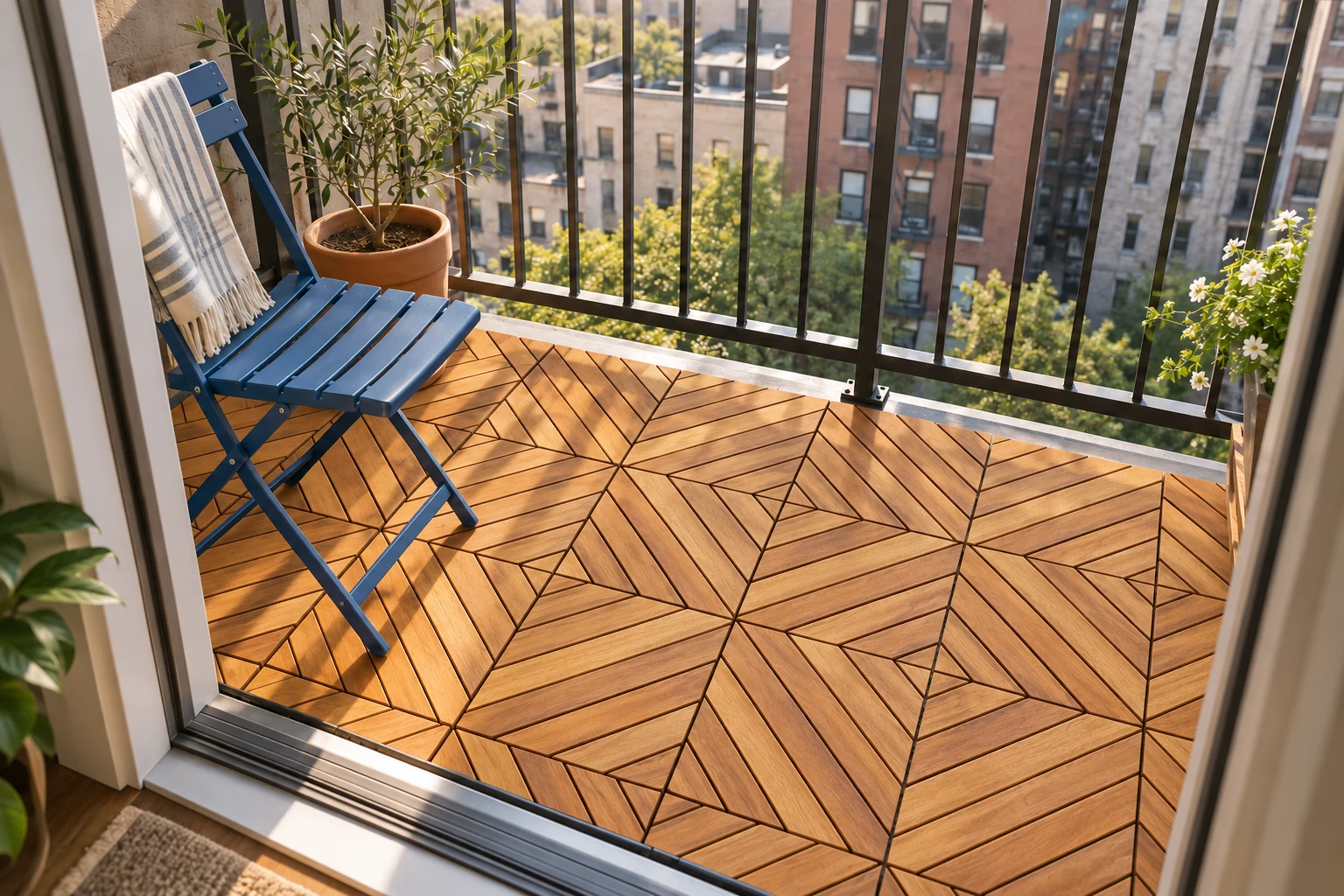
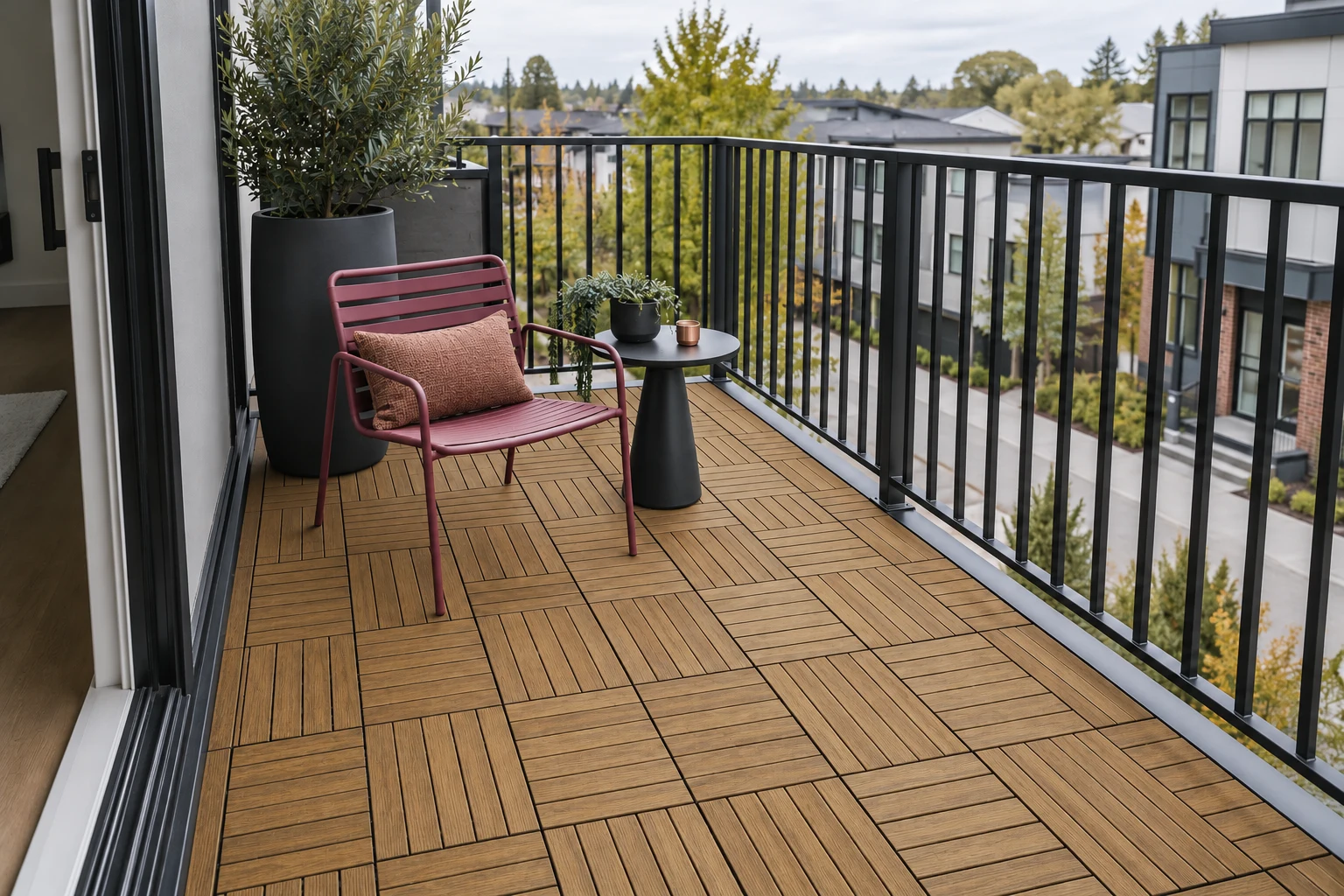
Square wood tiles give a plain floor a more finished appearance without a busy decorating scheme. Pair them with a blue folding chair and a terracotta pot, or use dark furniture for a sharper contrast. Changing the slat direction can create a parquet effect when the selected tile’s connectors and design allow it.
The PrimeZone acacia deck tiles shown in the shopping list use diagonal slats on a plastic interlocking base. They are a candidate for a compatible flat surface, with wood care built into the decision. The listing recommends wood oil or hard wax oil at least twice a year to extend their life; follow its current instructions for the finish you choose.
Inspect the delivery before laying the floor. Visible customer feedback includes broken tiles on arrival and a box with an inconsistent orientation. Checking early is much easier than discovering the problem halfway through your pattern.
A wood-tile option to consider
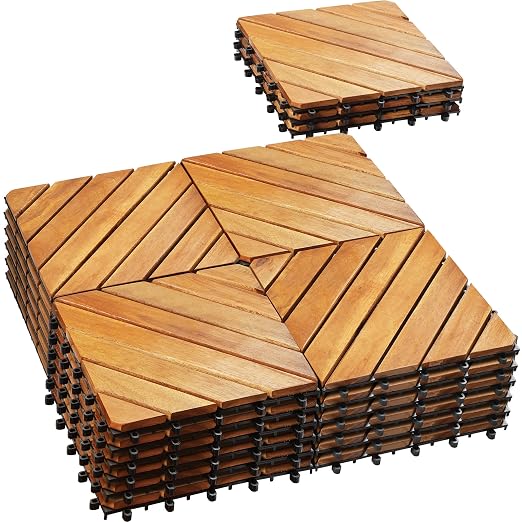
PrimeZone Acacia Deck Tiles — Natural Wood Diagonal, 27 Pack
Real acacia wood on a plastic interlocking base for a warm, patterned floor. This selected set uses diagonal slats; plan for outdoor wood care and check every tile for shipping damage before fitting.
View Product on Amazon2. Composite deck tiles: a wood look with less refinishing
Composite and plastic tiles are different materials. The selected NewTechWood UltraShield Naturale tiles combine wood fibers and polyethylene with a polymer cap. NewTechWood says this capped range does not need staining or sealing; it still needs cleaning and a suitable surface below.
The raised interlocking base leaves space for drainage and air circulation. That helps only when water already has a route away: it does not fix pooling underneath. Use the same tile system and compatible edging rather than assuming another brand’s connectors will fit.
The Peruvian Teak option is a warm brown that pairs well with burgundy accents and black furniture. Before ordering several boxes, confirm the color and pack size, then check each delivery against the order. Visible reviews include incorrect colors or sizes being sent.
A composite-tile option to consider
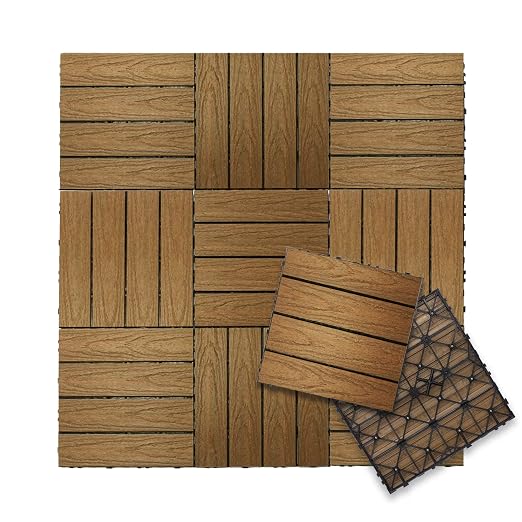
NewTechWood UltraShield Naturale Composite Deck Tiles — Peruvian Teak, 10 Pack
A wood-fiber and plastic composite with a capped surface and interlocking base. The selected Peruvian Teak box is a warm wood tone; matching trims are separate, and connectors work with the NewTechWood system.
View Product on Amazon3. An outdoor rug: color without a full-floor project
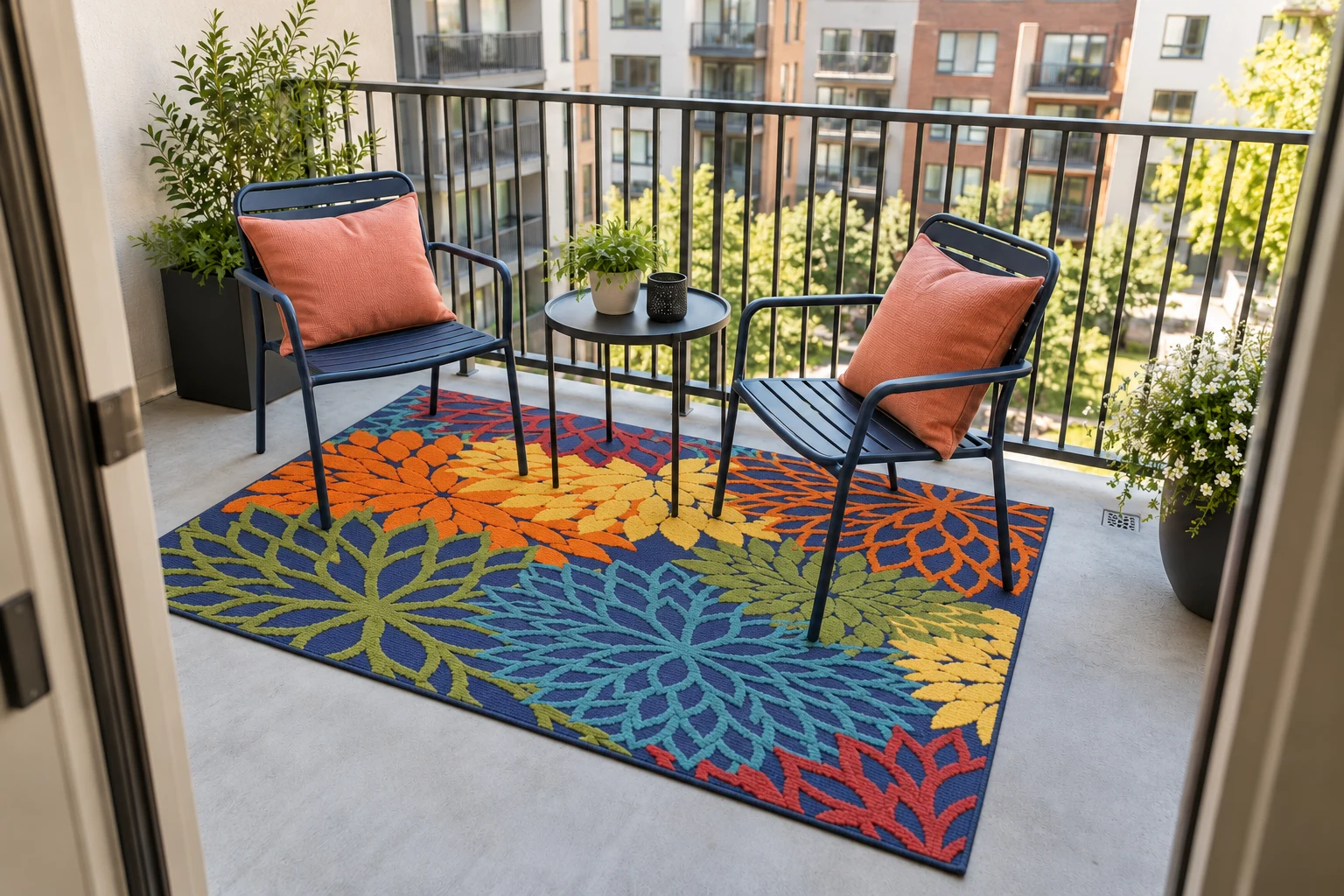
An outdoor rug makes sense when the existing floor works well and you mainly want the seating area to feel inviting. Let a border of the original floor show, then repeat one color from the rug in a cushion or chair. It is a simple way to make a tiny balcony feel intentional.
The Nourison Aloha navy multicolor rug has a bold floral pattern and an actual selected size of 3 feet 6 inches by 5 feet 6 inches. Measure that footprint; the rounded 4-by-6 label is not the precise dimension. Check that chairs can move without catching an edge.
Consider this pick for a sheltered seating area. The listing advises bringing it inside during extreme weather, and customer feedback raises flatness and slipping concerns. Keep edges flat, let the floor and rug dry after wet weather, and use only an outdoor-suitable pad approved for both the rug and your floor. Never let a rug cover a drain.
A colorful outdoor-rug option
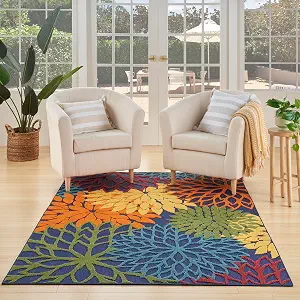
Nourison Home Aloha Outdoor Rug — Navy Multicolor, 3′6″ × 5′6″
A bold floral rug for defining a small seating area without covering the entire balcony. Use its actual dimensions rather than the rounded 4 × 6 label. Best considered for a sheltered spot; follow the care instructions and keep it stable and dry underneath.
View Product on AmazonA quieter rug for a small balcony with patterned furniture
If your cushions or planters already bring plenty of color, choose a floor pattern that is easier to mix with them. The nuLOOM Landry brown geometric rug uses tan and light cream motifs to soften a seating corner without turning it into another floral display. It is an alternative to the Nourison rug above, so choose the look that fits your space rather than layering both.
The selected 4-by-6-foot rug is made from polypropylene and polyester, not natural jute. That distinction matters when comparing outdoor rugs: a woven appearance does not tell you the fiber or its care needs. Check the current care label before cleaning and allow the rug and the surface below to dry thoroughly.
Mark its footprint before ordering, leaving the doorway and drainage outlets clear. Even a low-pile rug adds height. Check how its corners sit after unrolling, and bring it inside when conditions could lift or shift it.
A brown geometric outdoor-rug option
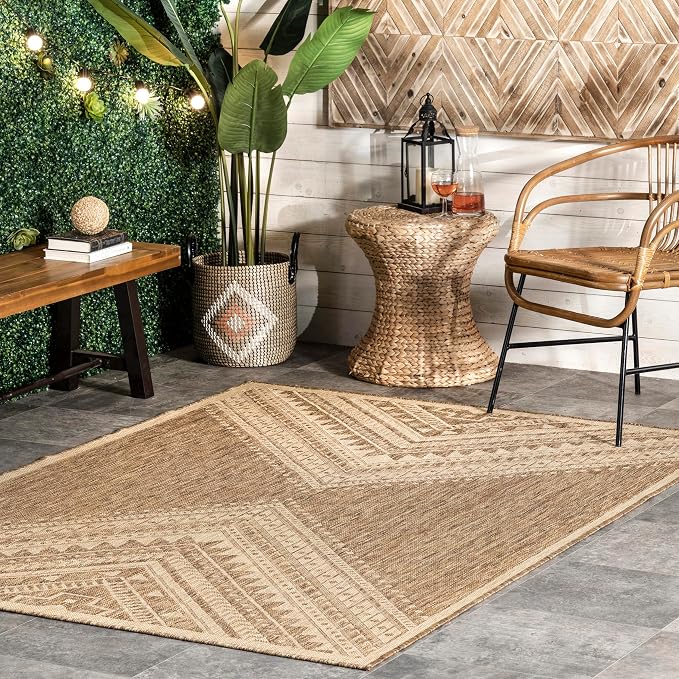
nuLOOM Landry Indoor/Outdoor Rug — Brown, 4′ × 6′
A low-pile brown geometric rug for a quieter seating corner. Made from polypropylene and polyester rather than natural jute; measure the 4-by-6-foot footprint and keep the floor underneath accessible for cleaning and drying.
View Product on AmazonA reversible plastic mat when you want to roll the floor covering away
A woven plastic mat offers a different feel from a textile-style outdoor rug. The Fab Habitat Brooklyn Blue reversible rug is woven from recycled plastic tubes, with a blue-and-cream abstract stripe pattern. Turning it over changes the balance of the pattern; rolling it up makes it easier to put away when you want the original floor exposed.
The selected size is 4 by 6 feet. The listing says it can be cleaned with a hose, but choose a cleaning spot permitted by your building and let the rug and floor dry before replacing it. The mat is a decorative covering, not a waterproof layer for the balcony.
Lightweight mats need care around wind and furniture. Visible buyers describe movement in wind and damage from dragging heavy furniture across the weave. Lift chair legs when moving them, check that the mat stays flat on your surface, and store it inside when strong winds are expected. Inspect its condition as soon as it arrives.
A reversible woven-plastic option
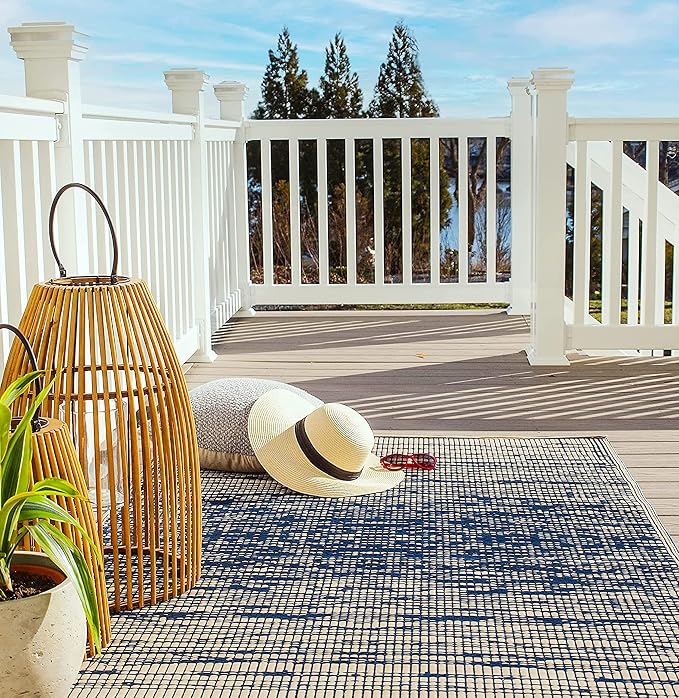
Fab Habitat Reversible Outdoor Rug — Brooklyn Blue, 4′ × 6′
A blue-and-cream abstract striped mat woven from recycled plastic tubes. The reversible design gives two looks, and it rolls up for storage. Keep it secure on a compatible surface, lift furniture instead of dragging it, and bring it inside in strong winds.
View Product on AmazonWhat about plastic tiles, artificial grass, or permanent tile?
If you prefer plastic balcony flooring tiles, compare the exact material, outdoor rating, and care instructions. A wood-look surface is not necessarily wood or capped composite, and appearance alone tells you little about how a product will handle your balcony’s exposure.
Artificial grass can create a green accent, but check the backing, cleaning needs, and water drainage before covering the whole floor. Outdoor ceramic systems and permanent tile require their own surface, weight, and installation checks. Indoor peel-and-stick flooring is not a substitute for a product explicitly approved for your outdoor conditions.
How to plan DIY balcony flooring before opening the boxes
Do a dry layout before making cuts. A little planning helps the finished grid look deliberate and keeps awkward pieces out of the most visible spots.
Calculate coverage, then check the actual tile layout
For a simple 5-by-8-foot area, the starting area is 40 square feet. If a hypothetical box covers 10 square feet, four boxes cover that area before cuts or spares. With a planning allowance of 10%, 44 square feet rounds up to five whole boxes. That allowance is an example, not a universal rule: posts, irregular edges, actual assembled tile dimensions, and reusable offcuts can change the order.
Test the first row and the door
Confirm the actual installed height and connector spacing, including trims. Lay a trial row and check the door throughout its travel. Keep the manufacturer’s perimeter gap; do not fill every edge tightly just to hide the original floor.
Follow the chosen system’s instructions
NewTechWood’s linked installation guide requires a clean, smooth, flat, strong surface and at least a half-inch gap from walls or other objects for expansion. Those requirements belong to that system. Use your selected product’s instructions for gaps, cuts, screws, and edge pieces.
Finish access and transitions
Order compatible finishing pieces where needed and preserve access to drains. Snap connections may assemble without tools, but cutting around posts can require suitable tools and protective equipment. If cutting is beyond your comfort level, choose a simpler layout or get help.
Plan for rain, sunshine, and the cleaning underneath
For an open balcony, ask what the selected material needs in your actual weather. Outdoor use does not mean every product will stay cool in direct sun, keep its color indefinitely, or be safe to walk on when wet. Choose an appropriate finish and avoid promising yourself barefoot comfort from a photo.
Sweep debris, keep water outlets clear, and inspect underneath removable coverings as their instructions allow. Move pots occasionally so trapped moisture is easier to spot. Clean gently according to the product guidance; do not assume a pressure washer or strong cleaner suits every finish.
If rainwater already sits on the bare balcony, solve that with the building before adding a covering. Weather-resistant tiles or a rug are decorative floor options, not a waterproofing system.
Make a small balcony feel finished with fewer things
Once the floor is settled, choose one seat you enjoy using, a small landing spot for a drink, and one plant that suits the light. Leave a clear route from the door. A narrow balcony usually feels more comfortable when furniture leaves some of the new floor visible.
Try diagonal acacia tiles with cobalt and terracotta, the navy floral rug with simple navy chairs, or Peruvian Teak composite tiles with burgundy accents. Keep the floor as the anchor and let the rest be easy. You can always add more after you have spent a few mornings out there.
Balcony flooring questions
What is the best flooring for a small balcony?
Choose by the existing surface, permitted materials, weather, and upkeep. Wood tiles suit someone happy to care for a real-wood finish. Capped composite can reduce refinishing. A suitable outdoor rug works when you want to define a seating area rather than replace the look of the whole floor.
Can you put deck tiles over concrete?
Some systems allow installation over sound, compatible concrete. Check the selected manufacturer’s surface requirements, existing drainage, installed height, and perimeter gaps. Tiles cannot make cracked, unstable, or badly draining concrete suitable.
What is the cheapest way to cover a balcony floor?
For a small seating zone, compare a correctly sized outdoor rug with the complete tile project, including whole packs and edging. Keeping clean concrete visible and styling only the area you use may be the most economical option. The cheapest choice depends on coverage and the products you select.
Is removable balcony flooring renter-friendly?
It may be, if your building permits the material and installation. Check the lease, surface compatibility, drainage access, and removal requirements first. Removable does not automatically mean approved or guaranteed to leave no marks.
Do I need waterproof balcony flooring?
A decorative covering must tolerate its intended outdoor exposure, but it does not replace the balcony’s waterproofing or drainage. If you have leaks or standing water, ask the building to address that before adding tiles or a rug.